Islamic Treasure

Islamic Treasure
"DON'T GO BY WHAT MEDIA AND OTHERS TELL YOU, DISCOVER THE TRUTH YOURSELF."
Showing posts with label Dawah. Show all posts

Friday, January 15, 2010

Debate with a Christian on Jesus (pbuh) being God and a part of Trinity.


The best way according to me, to refute claims of TRINITY and Jesus (pbuh) being God, by the Christians, is to ask the Christian, what according to him is TRINITY and how is Jesus part of it. Believe me, you get different answers from different Christians.

This is a part of the debate I had with a Christian named SULEMAN JOHN.

When asked about TRINITY he told me,

"God is a TRINITY which means that the Father, Son, and the Holy Spirit are all divine, but are distinct persons, not three gods."

My counter question was,

" They are all divine, but are distinct persons, not three Gods? What does it mean? Does it mean that God was only one but resided in three distinct person?"

Now just go through the response he gave me,

HIS RESPONSE:

"I know this may be confusing,but it doesnt mean it is wrong.
It just like God exists,but athiests cannot understand.So according to us,God is a trinity but muslims cannot understand it.

Let me tell you what we believe
"God is ONE,but exists as THREE distinct yet inseperable persons"

Now take this example.LOVE is ONE emotion, right? But it is not ONE in itself !
Love cannot exist without the lover and the beloved,right?.So there is Love,the lover and the beloved,all in complete unity.
So we say God,His word(which became flesh) and His spirit exist as ONE complete unity."

MY REPLY:

"Brother, leave away the Muslims, understanding something which does not exist. Even in your Christian brothers, some accept this TRINITY,and some do not. Alhamdolillah, every sect of Islam, believes in Tawheed. There is no two doubt about it.

If this Trinity concept was so very important, then why didn't Jesus (pbuh) declare it clear cut that listen, God is ONE,but exists as THREE distinct yet inseperable persons?
So, that, if not the Muslims, at least all the Christians sect would have believed in it.


So you say God,His word(which became flesh) and His spirit exist as ONE complete unity.

Therefore Assuming your given theory of Love to be Right,

God cannot exist without His word and His spirit. Right?


Now, brother do you know, that if the lover, or the beloved dies, then, Love is incomplete?

Thus, when you Christians say that Jesus (pbuh) who according to you was His WORD, died on the cross, you will have to agree that God became incomplete and is incomplete, till now.

So, brother, do you agree that your God almighty, the part of TRINITY is now incomplete? Or do you believe that Jesus, was not crucified. Whichever, point you accept, it will be a stricking blow to your Christian belief.

If you agree that your God almighty, the part of TRINITY is now incomplete, then you are refuting your TRINITY claim, hence coming closer to the teachings of ISLAM.

If you agree that Jesus, was not crucified, then you are refuting your CRUCIFICTION claim, hence coming closer to the teachings of ISLAM.Yes brother, so according to you, there is Love,the lover and the beloved,all in complete unity and Love cannot exist without the lover and the beloved.


May God guide you to the truth.

Write in your queries and suggestions to us at:- islamictreasure@hotmail.com

Tuesday, January 12, 2010

Gospel Of John 1:1- Does not prove TRINITY


Gospel According to John Chapter 1 verse 1:

In the beginning was the Word, and the Word was with God, and the Word was God.

First of all, it is quite obvious from simply reading the above verse that even in the very best case, this verse speaks only of a
"Duality" not a "Trinity."

Even the most resolute conservative Christian will never claim to find in this verse any mention whatsoever of a "merging" of a Holy Ghost with God and "the Word." So even if we were to accept this verse at face value and just have faith, even then, we find ourselves commanded to believe in a "Duality" and not a "Trinity." But let us see if this verse does in fact even command us to believe in a "Duality."

I have already told you that In the "original" Greek manuscripts (Did the disciple John speak Greek?), "The Word" is only described as being "ton theos"(divine/a god) and not as being "ho theos" (The Divine/The God). Please visit : http://islamic-treasure.blogspot.com/2009/12/truth-about-gospel-of-john-chapter-1.html

If we look at a different verse, 2 Corinthians 4:4, we find the exact same word (ho theos) that was used in John 1:1 to describe God Almighty is now used to describe the devil, however, now the system of translation has been changed:

"the god of this world (the Devil) hath blinded the minds of them which believe not."


According to the system of the previous verse and the English language, the translation of the description of the Devil should also have been written as "The God" with a capital "G."

If Paul was inspired to use the exact same words to describe the Devil, then why should we change it? Why is "The God" translated as simply "the god" when referring to the devil, while "divine" is translated as the almighty "God" when referring to "The Word"? Are we now starting to get a glimpse of how the "translation" of the Bible took place?

Why this pick and choose, selection and translation?

A more faithful and correct translation of this verse John 1:1 would thus read:

"In the beginning was the Word, and the Word was with God, and the Word was divine" (If you read the New World Translation of the Bible you will find exactly this wording).


Now that I have given the correct translation of the verse of John 1:1, let us go a little further in our study of the intended meaning of this verse John 1:1.

This verse was taken from the "Gospel of John." The very best person to ask to explain what is meant by a given statement is the author of that statement himself. So let us ask "John" what is his mental picture of God and Jesus (pbuh) which he wishes to convey to us:

John 13:16.

"Verily, verily, I say unto you, The servant is not greater than his lord; neither he that is sent greater than he that sent him."


So the author of John tells us that God is greater than Jesus. If the author of this Gospel did indeed wish us to understand that Jesus and God are "one and the same," then can someone be greater than himself? Similarly,

John 14:28.

"Ye have heard how I said unto you, I go away, and come [again] unto you. If ye loved me, ye would rejoice, because I said, I go unto the Father: for my Father is greater than I."


Can someone "go" to himself? Can someone be "greater" than himself?

John 17:1.

"These words spake Jesus, and lifted up his eyes to heaven, and said, Father, the hour is come; glorify thy Son, that thy Son also may glorify thee:"


If John meant to tell us that "Jesus and God are one and the same" then shall we understand from this verse that God is saying to Himself "Self, glorify me so that I may glorify myself"? Does this sound like this is the message of John?

John 17:12.

"While I (Jesus) was with them in the world, I kept them in thy (God's) name: those that thou gavest me I have kept, and none of them is lost, but the son of perdition; that the scripture might be fulfilled."


If the author of John wanted us to believe that Jesus and God are one person then are we to understand from this verse that God is saying to Himself "Self, while I was in the world I kept them in your name, self. Those who I gave to myself I have kept ..."? Is this what the author intended us to understand from his writings?

John 17:24.

"Father, I will that they also, whom thou hast given me, be with me where I am; that they may behold my glory, which thou hast given me: for thou lovedst me before the foundation of the world."


Similarly, did the author intend us to interpret this as "Self, I will that they also whom I have given myself be with me where I am; that they my behold my glory which I have given myself, for I loved myself before the foundation of the world"?


So, we begin to see that in order to understand the writings of a given author, it is necessary to not take a single quotation from him in a vacuum and then interpret his whole message based upon that one sentence (and a badly mistranslated version of that sentence at that).


Write in your queries and suggestions to us at :- islamictreasure@hotmail.com

Monday, December 7, 2009

BHAGAVAD GITA

A must have for Daees - Bhagavad Gita in Sanskrit with Roman English along with English translation and explanations.

Saturday, December 5, 2009

Friday, December 4, 2009

BIBLE-Authorized King James Version


The Authorized King James Version is an English translation of the Christian Bible begun in 1604 and completed in 1611 by the Church Of England.

New Testament: 1 to 39.
Old Testament: 40 to 66.

File Size: 1.51 MB

The Truth about Gospel Of John Chapter 1 Verse 1 - "In the beginning was the Word, and the Word was with God, and the Word was God."


This verse is one of the most famous verses quoted by Christians when they want to show that Jesus is God. First we will look at the English translation of the verse as seen in some different versions of the Bible.

Different Translations of John 1:1

King James Version

In the beginning was the Word, and the Word was with God, and the Word was God.

New International Version

In the beginning was the Word, and the Word was with God, and the Word was God.

Douay-Rheims Bible

In the beginning was the Word: and the Word was with God: and the Word was God.

The above are the different translations of the concerned verse as seen in the different versions of the Bible. When moving from one translation or the other, this verse is generally translated in the same manner in all the versions. However there is a certain level of deception in these translations.

Greek Text of John 1:1

The Greek Text

εν αρχη ην ο λογοϚ, και ο λογοϚ ην προϚ τον θεον, και θεοϚ ην ο λογοϚ.

Pay close attention to the words in the bold text. I will translate these texts below:

Transliteration, Pronunciation and Translation

  • Greek word: ο

Transliteration: ho

Pronunciation: ho

Translation: the

  • Greek word: λογοϚ

Transliteration: logos

Pronunciation: log'-os

Translation: word

The Mistranslated Word θεοϚ

In the above example, ‘ho’ is basically an article. In the English language there are 2 articles, ‘the’ which is a definite article and ‘a’ which is an indefinite article. In Greek however there is only 1 article which is definite.

When ‘logos’ is put after ‘ho’ it becomes ‘the word’ and with the absence of ‘ho’, it remains as ‘word’. However this is not where the great deception really is. The part with the great deception will come below.

Greek word: θεοϚ

Transliterated: theos

Pronounced: theh’-os

This word ‘theos’ does not only mean ‘God’ with a capital ‘G’. According to the “Thayer’s Greek Definitions”, the first meaning of this word ‘theos’ is written to be:

“A god or goddess, a general name of deities or divinities.”

One of the meanings of this word as explained by Strong’s Greek Dictionary is:

“A deity.”


As seen above, ‘theos’ also means ‘god’ i.e. any god. Greek has no such law like English where we can differentiate between ‘god’ and ‘God’ by the use of the capital letter or small letter. Hence to indicate whether ‘theos’ is referring to any ‘god’ or ‘God’, the language uses ‘articles’.

Depending on whether a word is the ‘subject’ or the ‘direct object (accusative)’ in a sentence, ο(ho) orτον(ton) is used respectively.

Verifying the English Translation

Do note that when ‘theos’ is the subject, then it is written asθεοϚ(theos) and when it is the direct object (accusative) then it is written asθεον’ (theon). In the Greek text of the verse John 1:1, it can be seen that there is an article before ‘θεονand the text is thus written asτον θεονwhich is transliterated to beton theonand should be translated as ‘the God’ or one can even translate it as only ‘God’. The point is that using the definite article, the word refers to God and not to the other meanings of the word ‘theos’ i.e. ‘a god’ or any god or goddess.

In the second instance where we see ‘theos’, it is written asθεοϚand there is no article before it. If this word would have been referring to ‘God’, then we would have seen the article ‘o’ (ho) before it. The article ‘ho’ is used before the word if it is the subject. However we see that there is an absence of a definite article. Thus it means that in this place, ‘theos’ should be translated as ‘god’ or ‘a god’ and not as ‘God’.

Correct Translation

The correct translation for John 1:1 would then be as such:

In the beginning was the word, and the word was with God, and the word was a god.

However we find that Christendom tries to put a veil over this problem in the Bible and all of them falsely translate the verses in a way to imply by hook or crook that the Word was also God.

Random Translations by Christendom

Not only does Christendom not translated John 1:1 properly, it is seen that they have been randomly translating the terms ‘ho theos’ and ‘ton theon’. For example lets take a look at 2 Corinthians 4:4.

In that verse ‘ho theos’ is translated as ‘the god’ with a small ‘g’ to refer to Satan. In the same verse ‘ton theon’ is translated as ‘God’. This is a clear ‘pick and choose’ tactic being practiced by Christendom.

Conclusion

The Christian world is trying hard to cover up the correct wordings of this verse. As it is the only verse in the Bible which came closest to the concept of Trinity, 1 John 5:7 (“For there are three that bear record in heaven, the Father, the Word, and the Holy Ghost: and these three are one”), has been detected as a fabrication and a corruption in the Bible by biblical scholars and kept out of the later versions of the Bible. This verse in truth also does not support Jesus’ divinity. So what we find is that as more investigations are made into the Greek texts of the Bible, Jesus is seen to be losing the “divinity factor”. However it is up to the Christian brothers and sister to realize the games that the Churches are playing with them.

It is an undeniable fact that the Bible got corrupted over time, so our brothers should leave the corrupted Old and New Testaments and come towards the uncorrupted Final Testament – Al Quran.


Write in your suggestions and queries to us at: islamictreasure@hotmail.com

Christianity: The Original and Present Reality - Muhammad bin Abdullah as Saheem

Description: From the author's introduction - 'This is a very brief summary in which I intend to clarify the origin of Christianity (Nasraaniyah) and its current reality. It is principally intended for a Christian in order that he may be aware of the roots of his belief. He will perhaps come to understand how Christianity has undergone change and substitution to the point that it has evolved into a man-made composition – this, after having once been a Divine message. I have made it a point to bring forth, within this summary, those evidences that brought forth the truth of the matter from actual texts of the Torah (Tawrah) and the Injeel.2 This was done to illustrate, to every Christian reader, my intention to point out the truth and to guide towards that which is correct. Thus I write, seeking Allâh’s help.'

Filesize: 100.65 Kb

Tuesday, December 1, 2009

THE COLLECTIVE OBJECTIVE AND AIM OF THE MUSLIM UMMAH

We Muslims are the member of an Ummah (Islamic community) whose sole purpose of existence and the aim of installation, according to Qur’an, is none other than calling people to Allah i.e. giving DA'WAH. As such, in this terrestrial existence not only our dignity and honor depends on realizing this collective aim, but our very existence as a religious community also depends on executing this duty in the right earnest.

In the seventeenth section (ruku) of Surah Al-Baqarah (the Cow), along with the order for the change of Qiblah, the following verse was revealed:

“And thus have We made you an exalted (middle) nation (Ummah), that you may be the bearers of witness against the people and (that) the Messenger of Allah may be the bearer of witness against you.” (2:143)

The objective and aim of the formation of this Ummah has been described very clearly thus in Surah Al-i-Imran:

“You are the best of the nations raised up for (the benefit of)men: you enjoin what is right and forbid the wrong and believe in Allah.” (3:110)”

This verse makes it crystal clear that, according to the Qur’an, there is a radical difference in the ultimate aims and goals of the Muslim Ummah and other nations and communities of the world.

By and large the goals which most nations of the world have been aiming at are self-aggrandizement, political power and military armaments, amassing of wealth, and subjugation of other peoples for their own selfish ends. This subjugation has been both political and/or cultural and economic.

On the other hand, the aim and object of the very existence of this Ummah is that Allah (SWT) is recognized as the Lord of the Universe, His commands are exalted and upheld by all, the truth triumphs, virtues and good deeds flourish and vices and wickedness are completely uprooted.

In other words, this Ummah is in reality the representative of God on earth: an agency for the propagation of virtue and an institution for the total eradication of evil and falsehood from this world.

History is a witness to the fact that so long as the Islamic community as a whole discharged its divinely ordained duty, it was itself exalted and honored along with the Truth it stood for. But when it turned a blind eye to its very raison d’etre and became only a nation like other nations pursuing worldly riches and comforts, it became the target of Divine wrath in the same way as the children of Israel had become earlier. In the beginning the punishment was confined to:

“And if you turn your backs He will bring in your stead a people other than you” (48: 38)

The sole aim of this Ummah is to invite people to the call of Allah. And not only its honour and respect, its very survival rests on the fulfillment of this aim.

There is only one way, both for the ‘ummiyyeen’ (unlettered people i.e. the Arabs) and ‘akhereen’ (other non-Arab nations) taking inspirations from the happy tidings contained in the Qur’an:

“It may be that your Lord will have mercy on you” (17:8)

they should build up their morale and pay heed to the Divine warning:

“….and if you again return (to disobedience) We too will return (to punishment).” (17:8)

They should get up to discharge their duties honestly and sincerely. These repeated warnings are for us only to remind that there is no way for we Muslims but to turn to Allah (SWT). And that not only for regaining the past grandeur and glory but also for the guarantee of our survival, there is no programme of action for us except turning ourselves and inviting others to Allah (SWT).

DA'WAH IS THE "MOST IMPORTANT" EXAMPLE (SUNNAH) FROM THE PROPHET (S.A.W.)'S LIFE FOR A MUSLIM TO FOLLOW.

Allah (S.W.T.) Reveals:

"Verily in the messenger of Allah you have a good example for him who looketh unto Allah and the last Day, and remembereth Allah much." [Holy Qur'an 33 : 21]


"Lo! Allah and His angels shower blessings on the Prophet. O you who believe! Ask blessings on him and salute him with a worthy salutation." [Holy Qur'an 33 : 56]


Here is an important question for a Muslim who loves his/her Creator.

The prophet of Islam (peace be upon him), did many things during his life that are indeed worth remembering and undeniably worth following by the Believers. BUT, what was the foremost mission of the prophet that none could or should ever overlook...

There are number of individuals and also large and small "Groups of Brothers", who travelled long distances from their homes, to inform and repeatedly remind our Muslim Brothers and Sisters at great length, the minuscule details of how the prophet dressed himself, behaved and lived his simple and honest life. I wish and pray that these individuals and Groups would ALSO propagate the primary purpose and the foremost mission of the prophet's life with the equal prominence, if not more.

One may ask what was the most important mission that the prophet accomplished against all the odds and earned Allah's Choicest pleasure? OR; What was the mission which Allah (S.W.T.) did not want the prophet to fail into or to overlook? The answer is found in the following verse of the Holy Qur'an.

"O Messenger! Make known that which hath been revealed unto thee from thy Lord, for if thou do it not, thou will not have conveyed His message. Allah will protect thee from mankind. Lo! Allah guideth not the disbelieving folk." [Holy Qur'an 5:67]


The primary purpose and the foremost mission of the prophet's life, we discover from the Qur'an and the history that it was of INVITING those who were "outside", to enter the Deen of Allah.


Besides inviting the Pagan Arabs to Islam, the prophet also conveyed the Revealed Message of Allah to the "People of the Book". History records that prophet did send several missions to various places and did convey the Message of Allah to the Leaders of the "People of the Book". He also entertained dialogues with them.

Doing Daw'ah to non Muslims and in particular to the "People of the Book" should be the Mission of those who regard the prophet to be "a good example for him".


Since large number of Christians are entering Islam in our times, it is worth devoting more time and effort in that direction. Our duty is to convey the Message of Allah which appears in the Torah, the Injeel and the Furqan with a suggestion of observing these True Messages that have been over shadowed by the non revealed guidance. If any who fails to judge by what Allah has Revealed therein, they are those who rebel.

My Dear Brothers and Sisters, this is no undue criticism of any particular group or any individual, but an eye opener for all the Believers who wish to preacher put into practice - the life style of the prophet .

"...But thou (O, Muhammad) art truly a Warner, and to every people a Guide." [Holy Qur'an 13:7]

CONCEPT OF GOD IN MAJOR RELIGIONS

There has always been a question in the minds of people about the existence of God. All major religions have believed in one god or another. Thus, believing in a supreme being that is omnipotent and omniscience is essential to the existence of mankind. This full-colored book tackles the issue of existence of God from a different perspective including starting off with how different people view God. It first categorizes the belief of the major religions into 5 types of religions. Then, it describes the concept of God for world's several major religions including Hinduism, Sikhism, Judaism, and others. The book ends with a detailed analysis of concept of God in Islam and how it perfects the concept of God.


You need a PDF Reader to open this book. If you do not have a reader, then please click here and download a free player.

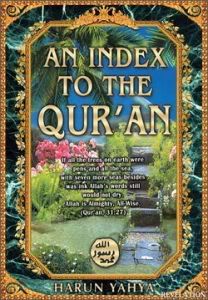
AN INDEX TO THE QUR'AN

The Index of the Qur’an is intended to make the Holy Book approachable to the reader. In this meticulous and painstaking effort, the author has attempted to put together verses in the Qur’an dealing with one subject together in one place in a particular sequence.


You need a PDF Reader to open this book. If you do not have a reader, then please click here and download a free player.

WHO WROTE THE QUR'AN?

This is a summary around the compilation of the Quran. Another book which is excellent and is highly recommended on this topic is 'The History of the Qur'anic Text from Revelation to Compilation : A Comparative Study with the Old and New Testaments' by Muhammad Mustafa al-Azami.

CLICK Here To Download.

You need a PDF Reader to open this book. If you do not have a reader, then please click here and download a free player.

Monday, November 30, 2009

DA'WAH TO THE WORLD


Booklet On Dawah to the World by Br. Sabeel Ahmad

The following is the material which was distributed at the recent ICNA Workshop, entitled "Dawah to the World," which was given by Br. Sabeel Ahmad, a student of Shaykh Ahmed Deedat.

SIMILARITIES BETWEEN "KALKI AVATAR" AND PROPHET MOHAMMAD (sallallahu ‘alayhi wa sallam)


A must read for giving Da'wah to Hindus.

Similarities between "KALKI AVATAR" and Prophet Mohammad(Sallallahu 'alayhi wa sallam)

Special:- Most Common Questions asked by Non-Muslims who have some knowledge of Islam


These most common questions about Islam can be answered with reason and logic. A majority of non-Muslims can be convinced with these answers. If a Muslim memorizes or simply remembers these answers, Inshallah he will be successful, if not in convincing non-Muslims about the complete truth of Islam, then at least in removing misconceptions about Islam and neutralizing the negative thinking about Islam and Muslims that the non-Muslims have. A very few non-Muslims may have counter arguments to these replies, for which further information may be required.


Q1.Present qur’an is not the original but that of usman (r.a.) ...Read
Q2.Does islam promote violence? ...Read
Q3.Qur’an uses ‘we’ for allah ...Read
Q4.The theory of abrogation ...Read
Q5.Meaning of alif laam meem ...Read
Q6.Does the qur’an say that the earth is flat?...Read
Q7.Does only Allah know the sex of the child in the mother’s womb?...Read
Q8.Hoor ...Read
Q9.Is the heart responsible for understanding?...Read
Q10.Allah has sealed the heart of kuffar ...Read
Q11.Heavens and earth created in six days and not eight days ...Read
Q12.Is man created from sperm or dust?...Read
Q13.Allah is the lord of two easts and two wests ...Read
Q14.One day in the sight of allah is 1,000 or 50,000 years ...Read
Q15.Iblis - angel or jinn?...Read
Q16.Author of the qur’an does not know mathematics ...Read
Q17.Is Allah forgiving or revengeful? ...Read